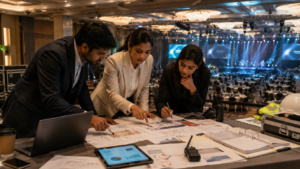
When someone says “event,” most people picture the same thing. Décor. Lights. A stage. A fancy welcome board. And someone walking around with a clipboard, looking very serious. But here’s the twist. Not everyone behind an event is doing the same job. Not even close.
In corporate settings, especially, there’s a huge difference between an event planner and business event organisers. The titles get mixed up all the time, and companies often assume they’re interchangeable. They’re not. And picking the wrong kind of support can mean the difference between a smooth, goal-driven event and a beautiful setup that doesn’t actually deliver results.
This blog explains the real difference between event planners and corporate event execution teams, and how to choose the right one for your event.
Why does the confusion happen in the first place
“Planner.” “Organiser.” “Event manager.” “Coordinator.” These words get thrown around casually, as if they all mean the same thing. And for social events like birthdays or weddings, the difference might not matter much. A good team is a good team.
But business events play by different rules.
Because corporate events aren’t just about looking good. They’re about outcomes. Sales leads. Brand positioning. Partner trust. Internal communication. Investor confidence. Employee engagement. Sometimes all of these at once.
That’s why roles split naturally. One side focuses on shaping the event. The other focuses on making it work under pressure.
What an event planner usually handles
They take the big idea and turn it into an actual plan. They’re usually involved early, when the event is still a concept, and help define how it should look and feel.
An event planner typically supports things like:
- choosing the right venue type and vibe
- building the theme and experience flow
- creating event schedules and run-sheets
- suggesting décor concepts and styling
- coordinating early-stage vendor discussions
- supporting guest list planning and RSVP structure
- helping shape the budget breakdown
In simple words, event planners design the roadmap.
They’re also great at keeping the event consistent. If the brand vibe needs to be premium, sharp, and classy, they’ll make sure everything aligns with that direction. No random choices. No confusing visuals. No “why is this here?” moments.
What business event organisers actually do
Business event organisers are execution-focused. Operations-heavy. Built for delivery. They don’t just help shape the event; they run it like a mission.
Their real work often starts when planning ends.
Once the plan is approved, vendors are selected, and timelines are locked, the organiser steps in to make sure the event runs smoothly in real conditions. Not the “perfect plan on paper” version. The real-world version.
Business event organisers usually handle:
- end-to-end vendor operations, not just coordination
- onsite staff management and duty charts
- event-day logistics like entry, seating, and movement
- production delivery: stage, AV, LED, power backup
- crowd management and guest experience flow
- troubleshooting live during the event
- compliance needs like vendor contracts and permissions
- backup planning for last-minute surprises
Think of them as the people who stop disasters before they become disasters.
Because reality always hits. Always.
A speaker arrives late. A mic glitches. A VIP wants a different entry. The ballroom layout needs to be changed. Food counters get crowded. The schedule needs reshuffling. Something will happen. It’s an event.
The core difference: planning vs performance
An event planner focuses on what the event should be. A business event organiser focuses on how the event will actually run.
It’s like the difference between designing a beautiful car and driving it through traffic with potholes, rain, and honking behind you.
A planner designs experience. An organiser delivers experience under pressure.
And in corporate events, that difference matters a lot. Because a poor event doesn’t just look bad. It affects reputation. Leadership confidence. Guest trust. Sometimes, even sales and partnerships.
No pressure, right?
How they handle budgets and vendors differently
Event planners usually help build the budget structure early. They plan spending categories, suggest where money should go, and help prevent overspending by shaping the overall cost plan.
Business event organisers handle budgets during execution. That’s a whole different game.
They manage:
- vendor negotiations in real time
- last-minute procurement without budget leaks
- on-ground requirements that weren’t visible early
- Cost control when timelines shift
Same with vendors.
Planners coordinate vendor selection and early communication. They keep things aligned with the creative vision.
Organisers manage vendor performance. Delivery quality. Timelines. Set up execution. Output.
And here’s what makes vendor management tricky: vendors don’t work in isolation. One vendor delay can crash the entire schedule. That’s why experienced organisers are obsessed with timing, backup plans, and coordination.
Which one you need depends on the event type
If it’s a small internal gathering, a simple team dinner, or a low-production meeting, a planner (or even an internal team) might be enough.
But once complexity increases, execution becomes the real challenge.
Events where business event organisers become essential include:
- conferences and summits
- product launches
- trade shows and exhibitions
- investor meets
- AGMs and leadership summits
- corporate award nights
- The dealer and distributor meet
Because these events have pressure points:
tight schedules, multiple stakeholders, VIP handling, large audiences, production complexity, strict branding requirements.
In those situations, it’s not about planning. It’s about control.
The best corporate events usually use both
This is something most companies learn after one stressful event.
The best events combine both roles: planning to shape the direction, and organising to guarantee execution.
That teamwork is powerful.
The planner keeps the experience polished and consistent. The organiser keeps it stable, smooth, and on track.
And when both work together, the event feels effortless. Like everything is just flowing.
But behind the scenes? It’s controlled chaos managed by professionals who know what they’re doing.
That’s the difference.
Conclusion
It’s easy to assume that an event planner and a business event organiser are the same. Many people do. But in business events, the difference is real.
Event planners shape the vision, flow, and look of the event. Business event organisers handle execution, logistics, production control, and live problem-solving.
So when hiring for your next event, don’t focus too much on the title. Ask what they actually do. Ask what they manage on event day. Ask how they handle vendors, timelines, risks, and unexpected changes. Because the right support doesn’t just make the event look good.