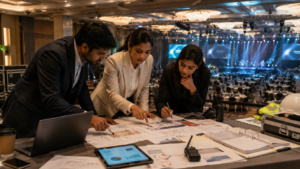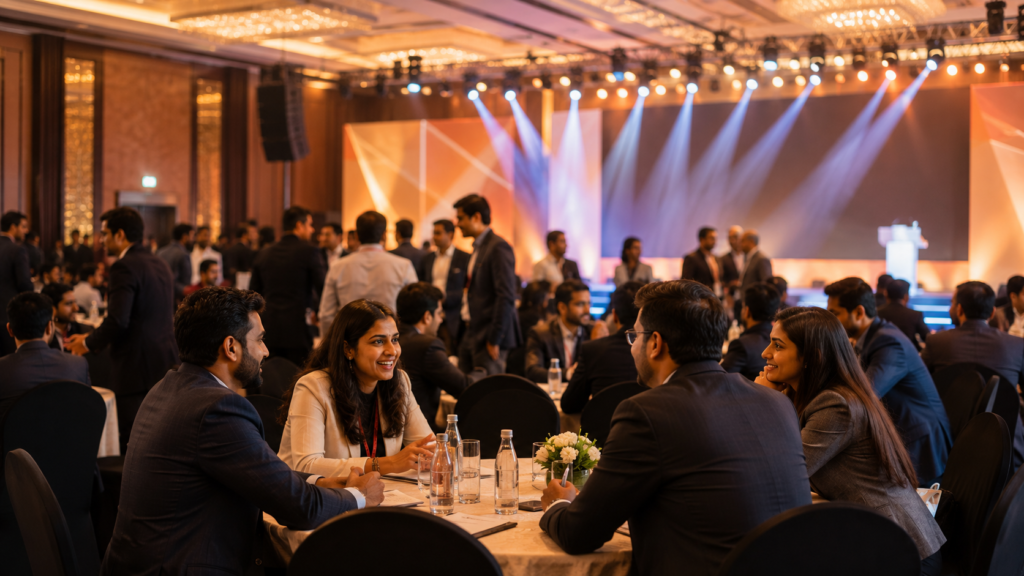
Most companies still default to the same format for important business gatherings: a conference room, a projector, a few hours of slides, and a buffet lunch. It works, technically. But the benefits of MICE events go well beyond what a standard meeting room can offer, because MICE (Meetings, Incentives, Conferences, and Exhibitions) is built around outcomes, not just attendance. For HR leaders and Travel Managers tasked with stretching every rupee of the events budget while still proving impact, that distinction matters more than it might seem at first glance.
This isn't an argument that meetings are obsolete. It's an argument that the format you choose shapes the result you get, and that result has real consequences for engagement, retention, and how your people talk about the company once they're back at their desks.
What Is a MICE Event, and How Is It Different from a Standard Meeting?
A MICE event brings together structured business agendas with experience design, location strategy, and logistics that a regular meeting simply doesn't account for. Think of an annual sales kickoff held at a resort with breakout sessions and a recognition dinner, versus the same kickoff held in the head office cafeteria.
The core differences usually come down to:
- Setting — a destination or curated venue versus a default conference room
- Structure — a blend of work sessions, networking, and recognition moments versus back-to-back presentations
- Intent — designed to motivate, reward, or build relationships, not just transfer information
- Logistics — travel, accommodation, and on-ground coordination handled as part of the experience, not an afterthought
None of this means MICE events are inherently more expensive. It means the spend is directed differently, often with a clearer line to business outcomes.
The Real Benefits of MICE Events for Modern Organizations
When companies weigh the benefits of MICE events against a standard meeting, a few advantages show up consistently:
Higher engagement and retention of information. People remember experiences far better than they remember slide decks. A change of environment alone improves focus and recall, which matters when the agenda includes strategy rollouts or major announcements.
Stronger team bonding outside the usual hierarchy. Shared meals, informal sessions, and off-site activities tend to flatten reporting lines temporarily. Junior staff speak more freely, senior leaders seem more approachable, and that carries back into day-to-day collaboration.
Boosted morale and loyalty. Employees notice when a company invests in the experience around a gathering, not just the agenda. It signals that leadership values their time, not just their output.
Brand and culture-building opportunities. Conferences and exhibitions put your organization in front of clients, partners, and prospective hires simultaneously. A well-run event does double duty as a recruitment and reputation tool.
A clearer path to measurable ROI. Productivity gains, reduced attrition, and stronger client relationships are easier to track when the event is designed with specific objectives from the start, rather than treated as a routine obligation.
How Incentive Travel Programs Take Engagement Further
Incentive travel programs are one of the most effective tools inside the MICE category, and the reasoning is more behavioral than financial. A cash bonus gets deposited and forgotten within a pay cycle. A trip earned through performance becomes a story people tell colleagues for years, and that story does quiet recruitment and retention work long after the trip ends.
Companies running structured incentive travel programs typically see this reflected in renewed sales momentum and stronger year-over-year participation, because the reward is tied to a memorable experience rather than a number on a payslip.
Corporate Meetings and Events, Where Traditional Formats Fall Short
To be fair to the traditional model, corporate meetings and events still have a place — quick syncs, internal reviews, and routine check-ins don't need a destination. But when the goal shifts to motivation, culture, or client relationships, the standard format starts to show its limits: meeting fatigue sets in fast, retention of key messages drops within days, and there's rarely anything that creates lasting impact once everyone's back at their desks. The format that works for a Tuesday status update isn't built to carry the weight of an annual strategy reset or a major incentive push.
Are MICE Events Worth the Investment for Smaller Teams?
Yes, and the scale just needs to match the team. A smaller group doesn't need a five-star resort to capture the benefits of a well-designed event. A short, well-organized retreat with a clear agenda and a genuine recognition component can deliver the same engagement and morale lift as a larger conference, often at a fraction of the cost. The principle that matters is intent and design, not headcount or budget size.
How Do You Measure ROI on a MICE Event?
Track a mix of hard and soft indicators: post-event engagement surveys, attrition rates in the following two quarters, repeat attendance at future events, and any measurable shift in the metric the event was designed around, whether that's sales performance, client renewals, or internal mobility. The key is setting these benchmarks before the event, not after, so there's something concrete to compare against once it's over.
Conclusion
The benefits of MICE events come down to one simple shift: designing gatherings around outcomes instead of just logistics. Whether it's a leadership conference, an incentive trip for top performers, or a client-facing exhibition, the format itself becomes part of the message you're sending to your people and your partners.
For HR leaders and Travel Managers juggling budgets, vendors, and outcomes across multiple events a year, having one partner who handles the planning, travel, and on-ground execution end to end makes the difference between an event that just happens and one that actually delivers. That's where Aster Travel comes in, covering corporate travel, MICE, group events, and destination weddings under a single roof.