Anyone who has organized a conference, an incentive trip, or a company-wide convention knows the truth: MICE event planning challenges rarely show up one at a time. Budgets shift, vendors miss deadlines, attendees lose interest halfway through day two, and somehow it all still has to look effortless on the day. For HR teams and corporate travel managers tasked with pulling this off, the gap between "plan on paper" and "event that actually works" can feel wider than expected.
Understanding where things typically go wrong, and what actually fixes them, makes the difference between a stressful scramble and an event people remember for the right reasons.
Why MICE Events Have So Many Moving Parts
MICE, short for Meetings, Incentives, Conferences, and Exhibitions, isn't a single event type. It's a category that spans intimate leadership retreats and 2,000-person industry conferences, each with its own venues, travel patterns, and attendee expectations. That variety is exactly why the planning gets complicated. A single event might involve flights, ground transport, hotel blocks, AV vendors, catering, and a registration system, all of which need to sync perfectly with each other and with a fixed date that won't move.
The Biggest Challenges in MICE Event Planning
Most of the recurring headaches fall into a handful of categories. Knowing them in advance is half the battle.
Budget Control and Cost Overruns
Costs creep in from places you didn't budget for: a venue's hidden service charges, last-minute AV upgrades, or currency fluctuations on an international event. Without a contingency buffer and a single source of truth for spend, a tightly planned budget can blow past projections before anyone notices.
Coordinating Vendors and Stakeholders
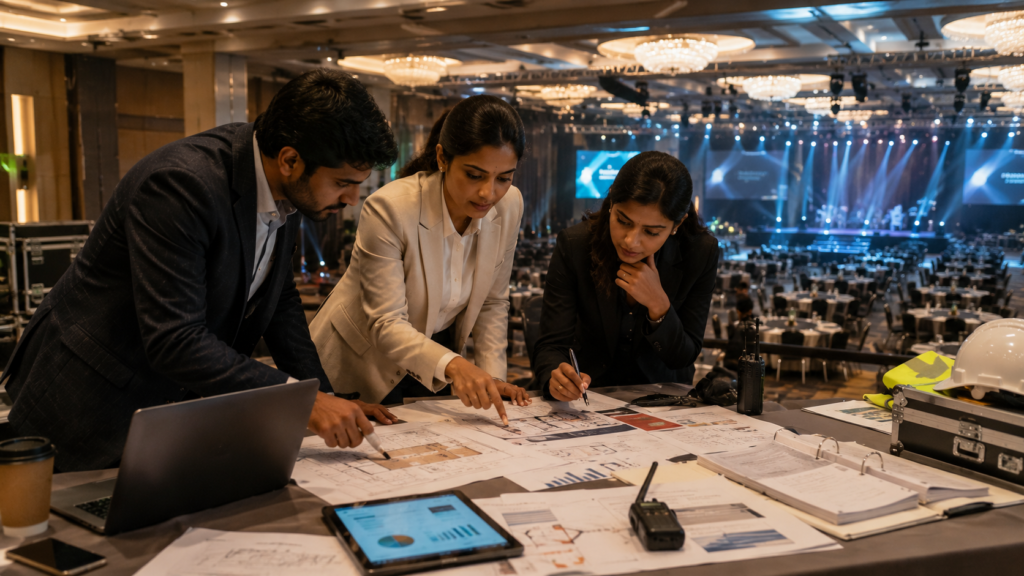
A typical corporate event pulls in a dozen or more vendors, each with their own contracts, timelines, and points of contact. When venue, catering, transport, and tech teams aren't talking to each other, small miscommunications turn into on-site fire drills.
Managing Event Logistics Across Multiple Locations
This is where event logistics management gets genuinely hard. Multi-city itineraries, visa requirements, group flight bookings, and ground transfers all need to line up, and a delay in one leg can ripple through the entire schedule for every attendee behind it.
Keeping Attendees Genuinely Engaged
A packed agenda doesn't guarantee an engaged room. Attendees who feel like they're sitting through a marathon of sessions tend to disengage by the afternoon, and that disconnect shows up clearly in post-event feedback scores.
Handling Last-Minute Changes and Risk
Flights get cancelled, speakers fall sick, and weather doesn't check the run sheet. Events without a real contingency plan tend to handle these moments reactively, which is usually when things visibly go wrong in front of guests.
How to Overcome These Corporate Event Planning Challenges
The good news is that every one of these challenges has a practical countermeasure, and most of them come down to planning earlier and centralizing decisions rather than working harder once things are already in motion.
- Build a 10 to 15 percent contingency into every budget line, not just the total, so overruns in one area don't derail the rest.
- Use a single vendor management system or point of contact so every team is working from the same updated timeline.
- Map travel and logistics on a master itinerary that flags dependencies between flights, transfers, and venue access.
- Design agendas around energy, not just content, mixing structured sessions with networking breaks and interactive formats.
- Have a documented backup plan for the things most likely to go wrong: speaker no-shows, weather, and travel delays.
This kind of disciplined, centralized approach to corporate event planning is what separates events that run smoothly from ones that merely survive.
How Can Technology Improve Event Logistics Management?
Technology has quietly become one of the most effective fixes for logistics headaches. Registration platforms automate the manual work of tracking who's coming and from where, while real-time itinerary apps let attendees and organizers see changes the moment they happen, instead of finding out at the airport.
RFID or QR-based check-ins cut down on long lines and give organizers live headcounts across sessions. Centralized dashboards that pull vendor confirmations, travel bookings, and budget tracking into one view also mean fewer surprises, because problems surface while there's still time to act on them rather than after the fact.
Why a MICE Specialist Makes the Difference
Even with the right systems in place, MICE events involve too many simultaneous variables for most internal teams to manage alongside their day-to-day work. This is usually where bringing in a specialist partner pays off, not because internal teams aren't capable, but because dedicated MICE expertise means someone is solely focused on the logistics, vendor relationships, and contingency planning that an event needs.
Aster Travel works specifically in this space, handling corporate travel, MICE, group events, and destination weddings under one roof. That means HR and travel teams get a single accountable partner managing flights, accommodation, ground logistics, and on-ground execution, instead of juggling separate vendors for each piece. One partner. Endless possibilities.
Conclusion
MICE event planning challenges are real, but they're also predictable, which is exactly what makes them solvable. Budget overruns, vendor chaos, multi-city logistics, attendee fatigue, and last-minute curveballs all have proven fixes, from earlier contingency planning to smarter use of event technology.
Whether your team handles the next event in-house or partners with specialists who do this for a living, the goal stays the same: an event that runs smoothly enough that no one in the room ever has to think about what's happening behind the scenes.