The conversation around event planner vs event organizer comes up more often than many businesses expect. On paper, the roles can look almost identical. Both deal with events, both coordinate vendors, and both aim to make things run smoothly. But in practice, the difference becomes obvious the moment an event starts getting larger, more corporate, or simply more complicated.
A lot of companies actually realize this a bit too late. A planner who handles intimate celebrations beautifully may struggle with large-scale business logistics, while a corporate organizer might focus heavily on operations and less on the creative atmosphere. Neither approach is wrong. They just serve different purposes.
This blog breaks down where these roles overlap, where they differ, and how businesses can decide which one they actually need.
Understanding the Role of an Event Planner
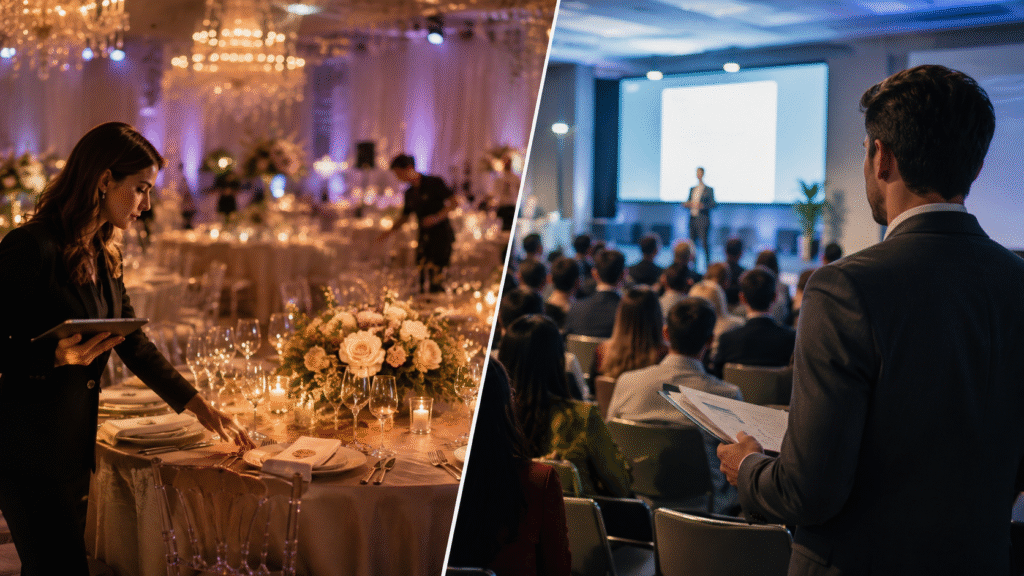
An event planner is usually focused on designing and coordinating the overall experience of an event. That includes the creative side, guest flow, vendor coordination, themes, schedules, and atmosphere.
In many cases, event planners work closely with clients from the very beginning. They shape the vision first, then figure out how to execute it.
Typical Responsibilities of an Event Planner
An event planner often handles:
- Venue selection
- Decor coordination
- Catering discussions
- Guest experience planning
- Entertainment arrangements
- Timeline creation
- Vendor communication
There is often a strong creative element involved. The planner is thinking about how attendees will feel when they walk into the venue, how transitions happen between sessions, or whether the event reflects the company’s image properly.
And honestly, that emotional side matters more than people think.
What Does a Corporate Event Organizer Do?
A corporate event organizer usually works at a more operational and business-focused level. The role leans heavily toward logistics, execution management, budgeting, travel coordination, technical arrangements, compliance, and large-scale scheduling.
For corporate conferences or multi-city business events, organizers are often managing hundreds of moving pieces simultaneously.
That includes things like:
- Delegate registrations
- Flight and hotel coordination
- Corporate travel schedules
- Ground transportation
- AV and technical setup
- Risk management
- Vendor contracts
- Budget tracking
It becomes less about styling tables and more about keeping an entire ecosystem functioning without disruption.
In larger organizations, this role can feel surprisingly intense. One delayed airport pickup can affect an entire leadership schedule.
The Biggest Difference Comes Down to Scope
This is where the event planner vs event organizer comparison becomes clearer.
Event planners are often experience-focused.
Corporate event organizers are usually systems-focused.
Of course, there’s overlap. A good organizer still cares about attendee experience, and an experienced planner absolutely understands logistics. Still, their primary priorities tend to differ.
A simple way to look at it:
| Event Planner | Corporate Event Organizer |
| Focuses on experience and presentation | Focuses on logistics and execution |
| Often handles smaller or creative events | Often handles large business events |
| Works heavily on themes and flow | Works heavily on operations and schedules |
| Guest-focused coordination | Business-focused coordination |
| Vendor styling and aesthetics | Travel, budgeting, and technical coordination |
Not every company notices these differences immediately. But during high-pressure corporate events, they become very visible.
Where Corporate Events Need More Than Planning
Business events today are no longer just conference-room meetings with coffee counters and projectors. Expectations have changed.
Companies now expect:
- Smooth travel experiences
- Real-time communication
- International coordination
- Flexible scheduling
- Hybrid event capabilities
- Strong contingency planning
That’s where corporate event organizers become essential.
A product launch involving executives from multiple countries, for example, requires far more than venue decoration. Flights need monitoring. Hotel check-ins need syncing. Local transportation must align with meeting schedules. One disruption can create a chain reaction.
And sometimes these details sound small until they fail.
The Overlap Between the Two Roles
Now here’s where things get interesting.
Many modern agencies actually blend both services together. Clients increasingly want one partner who can manage aesthetics and logistics without splitting responsibilities between multiple vendors.
That has slowly reshaped the industry.
A corporate event organizer today may also contribute to creative direction, while event planners are becoming more operationally skilled. The line has blurred a little over the years.
Still, specialization matters.
For example:
- A leadership summit may require deep operational coordination
- A gala dinner may need stronger creative storytelling
- A multi-day incentive trip may require both equally
In most cases, businesses benefit when both functions work together instead of competing.
Difference Between Event Coordinator and Event Manager
The difference between event coordinator and event manager also creates confusion because the titles sound interchangeable. But there are subtle distinctions.
An event coordinator usually focuses on day-to-day execution tasks.
An event manager oversees the bigger picture.
Event Coordinator Responsibilities
- Managing schedules
- Vendor follow-ups
- Guest assistance
- Handling on-site support
- Coordinating deliveries
Event Manager Responsibilities
- Budget oversight
- Strategy alignment
- Team leadership
- Risk planning
- Decision-making authority
The coordinator handles immediate movement. The manager controls direction.
Kind of like the difference between operating the engine and steering the vehicle.
Which One Does Your Business Actually Need?
This depends entirely on event complexity.
A smaller networking dinner may only require a planner. A large conference involving international delegates likely needs experienced corporate organizers with logistics expertise.
Here are a few quick indicators.
You probably need an event planner if:
- The event is highly experience-driven
- Branding and aesthetics are the priority
- Guest engagement matters most
- The scale is relatively manageable
You probably need a corporate event organizer if:
- Multiple cities or countries are involved
- Executive schedules are tight
- Travel coordination is extensive
- Large budgets need tracking
- There are operational risks involved
Many businesses underestimate this part initially. Then the event date gets closer and suddenly ten different teams are trying to coordinate airports, rooming lists, and last-minute attendee changes.
That situation gets stressful very quickly.
Why Businesses Are Combining Travel and Event Expertise
Corporate events rarely exist independently anymore. Travel has become deeply connected to event success.
Executives arrive from different locations. Teams extend stays. Clients combine meetings with networking sessions. Some organizations even merge conferences with incentive travel programs.
So companies increasingly prefer agencies that understand both event execution and business travel coordination together.
It creates fewer gaps.
And honestly, fewer gaps usually mean fewer expensive surprises.
Conclusion
Understanding the event planner vs event organizer distinction helps businesses make smarter decisions before problems appear. While both roles contribute to successful events, their strengths serve different business needs. One focuses more on crafting experiences, while the other ensures operations remain stable under pressure.
At the same time, the difference between event coordinator and event manager also matters because execution and strategy require separate skill sets. Companies that recognize these layers early tend to run smoother events overall.
In the end, successful corporate events are rarely built on creativity alone or logistics alone. They work best when both come together naturally, without friction, and without constant firefighting behind the scenes.